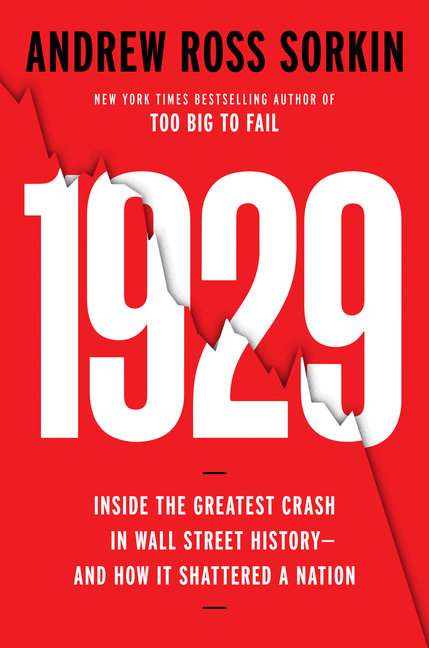
Andrew Ross Sorkin brings the drama of the crash to a high pitch. He has consulted weather reports, diaries, architectural records and every newspaper imaginable to create a vivid and historically accurate account of the boom, crash and aftermath ... It is one of the best narrative histories I’ve read.
This is big stuff, and Sorkin ultimately does not deliver on his grandest ambitions. Nevertheless, there is a pulpy excitement in watching an author stretch his abilities, and if 1929 is not an intellectual monument, it does provide true-crime thrills that seem destined for prestige television adaptations ... Sorkin carries his readers along a current of astonishing detail conjured from the marginalia of his sources. It is impossible not to admire this dedication to craft, but readers can absorb only so many descriptions of elegant mansions and champagne yachts before feeling there is something prurient about so much high-definition exposure to extreme wealth ... The book’s quasi-pornographic character is exacerbated by Sorkin’s habit of writing in clichés, which at times gives his prose an appearance of too much makeup and not enough clothes ... When Sorkin catches his breath, moreover, he is strangely sympathetic to what he acknowledges is a 'gallery of rogues,' and even more strangely incurious about the political implications of his narrative ... There are surely important lessons for our current moment in Sorkin’s book; it is not clear he knows what they are.
1929 is an attempt to turn history back into journalism ... The problem with this approach is that everyone is dead—there’s no one to interview, and few primary sources for the human drama of it all ... Sorkin draws on letters, speeches, newspaper stories, and bank archives ... It may not be his fault that it only intermittently works ... Sorkin’s rendition is limited by his desire to frame 1929 as a story about people ... Sorkin is more interested in how the crisis felt than why it happened.