PositiveThe Guardian (UK)No one knew what to call them. For some they were \'skyjackers\', for others \'air bandits\'. Neither name stuck, but by 1970, these figures were fixtures of the western political landscape. It helped that hijacking planes was easy. Bag checks, metal detectors and frisking at airports were proposed, only to be dismissed as overkill. The result was a lethal carnival of transnational terrorism that peaked in the 70s, when commandeering a plane was as much a rite of passage as backpacking to Kathmandu for some countercultural types. Spanning four continents and drawing on sources in a dozen languages, Jason Burke’s survey of this set combines a flair for period detail – sideburns and aviator shades, berets and Beretta pistols – with impressive digests of Arab and Iranian history ... Burke, the Guardian’s international security correspondent, writes with amused detachment, sketching militants less as ideologues than oddballs ... But there is a darker undertow ... If ideology sometimes recedes from these pages, it is because many of Burke’s antiheroes were functionally illiterate when it came to theory. What counted was the excitement of the escapade, not the utopia it was meant to bring about. That doesn’t mean there isn’t an interpretative thread running through the disparate material: the failure of the left, Burke argues, left a vacuum that was swiftly filled by Islamism.
RaveThe Times (UK)Sweeping ... Studded with novelistic vignettes of insurrection, it doubles as a brisk history of Atlantic slavery ... Hazareesingh’s book succeeds on the strength of its remarkable cache of evidence.
RaveThe Times (UK)[A] pacey, blow by blow account ... Sorkin’s book is, in the main, a gallery of finely drawn pen portraits.
PanThe Guardian (UK)Takes a caustic look at Black Lives Matter from the lofty vantage point of his Parisian garret ... This is a strange, muddled book.
RaveThe Times (UK)Prideaux makes full use of Avant et Après ... It is to Prideaux’s credit that she deals with the subject sensibly and sensitively ... There are a few lapses of judgment in this otherwise chiselled account, account ... Still, it is undeniable that Prideaux, who has also written about Nietzsche, Strindberg and Munch, is one of the finest biographers working today. Quite apart from possessing reserves of sympathy, she also has a feel for place, gleaned from visits to Gauguin’s many adopted homelands. Life in Polynesia was tough, she shows.
PositiveThe Guardian (UK)A marvellously lucid overview of capitalism’s critics, written in good old-fashioned expository prose—if at times a touch workmanlike compared with some of his subjects, such as exhilarating stylists Marx and Carlyle ... This is by far the best primer I have read on the luminaries of the economic left.
PanThe Guardian (UK)The broadcast conceit doesn’t translate well on the page, leaving the author exposed ... On the theme of politics, Barnes seems to be on the defensive ... Ultimately it is not just these niggles of inconsistency, but the sense of writing forced to fit a frame that is altogether too neat that left me cold. Who knows, though – a future reread might do the trick. Perhaps when I reach his age, in half a century, I’ll have changed my mind too.
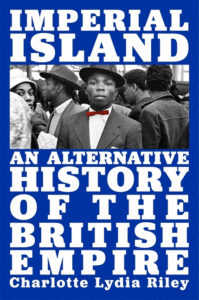
Charlotte Lydia Riley
MixedThe Guardian (UK)Imperial Island rests on the assumption that racism in postwar Britain is self-evidently the upshot of colonialism ... The causal link, though, isn’t nearly as neat as Riley suggests. Arguably, she’s got it backwards ... Imperial Island may disappoint as \"a history of empire in modern Britain\", as the subtitle has it, but it nevertheless succeeds as a history of race relations ... But there is a habit of talking down to the reader, spelling out obvious ironies and rephrasing quotes just in case we lack the moral clarity to recognise enormities for what they are.
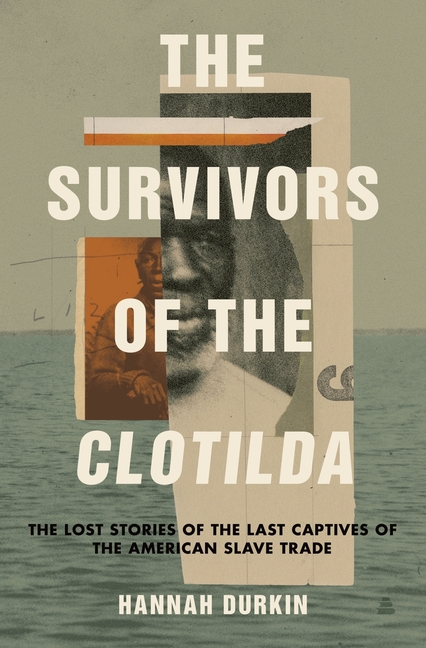
Hannah Durkin
RaveThe Times (UK)A remarkably wide-ranging book taking in everything from science to soft drinks to show how slavery’s insidious hand wormed its way into the very fabric of American life.
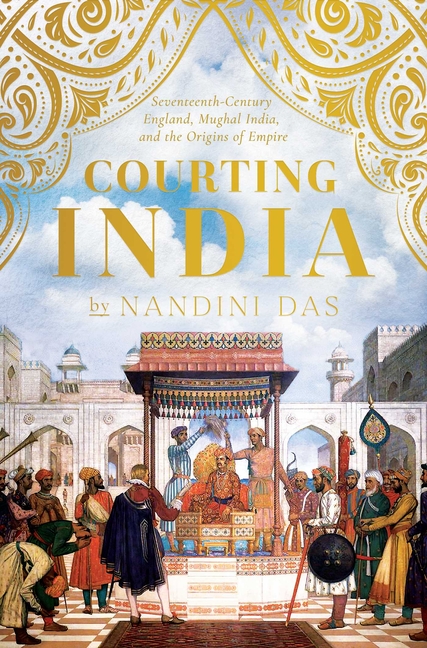
Nandini Das
PositiveThe Times (UK)A scholarly biography with an antiquary’s eye for detail. Das’s leisurely diversions into the world of Jacobean fashion, food and curiosities are fascinating ... Das works through irony and implication, showing how the 17th century had little time for the finer humanitarianism of our age.
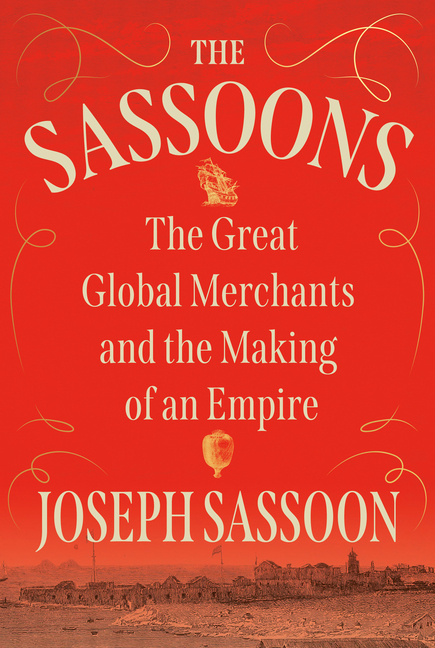
Joseph Sassoon
MixedLos Angeles Review of BooksAn exhaustive tome ... I am not entirely persuaded by this tale of bourgeois betrayal. It’s a familiar trope and one as lazy as the character flaw it indicts. For one thing, it seriously underestimates aristocratic inventiveness ... Sassoon is drawn to neat moral narratives, which come at the expense of economic explanations ... All the same, the tale of bons vivants makes for riveting storytelling, if not terribly sound business history. Readers will take away a great deal of British and Asian modern history from Sassoon’s globetrotting account.