RaveThe New York Times Book ReviewPhilosophical and disarmingly dishy ... The meringue-light surface of The Maltese Version, which had thus far presented itself as a caper about two female friends trying to make it in the dying travel-guide industry, might conceal unforeseen depths ... Smith is an observant and dexterous writer ... A steely exploration of novelistic form and what said form can and cannot reveal. It’s a book that — for both its inventiveness and its many linguistic sleights of hand — can renew our faith in the playful joys and critical capacity of fiction.
MixedThe New York Times Book ReviewUnfortunately, for a lot of this novel we’re stuck inside these people’s heads. Bunny, it’s not always pleasant there ... Awad’s great gift lies in her ability to deftly weaponize prevailing notions of good taste ... I admit that Awad’s enthusiasm for a Netflix-ified version of gothic...sometimes made me want to beg for mercy ... Maybe this book is either too fun to hate or hating it is fun, even if it lacks the complexity of the original Bunny. ... Here’s some wisdom seldom taught in school: If you aim at anything too frequently, you’ll inevitably miss the mark.
Rivka Galchen
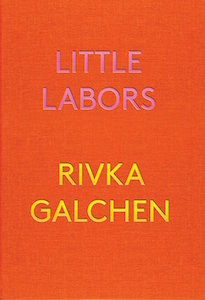
PositiveThe Los Angeles Review of BooksI found Galchen’s brief book accurate, poignant, and wry. But occasionally, in reading Little Labors, I was quite sunken, quite despondent, and not in a playful way ... Galchen’s small volume concerns interrelated experiences of difference, exceptionality, and precariousness, which can seem ineluctably (and sometimes frighteningly) entailed by one’s status as a female human ... Beyond the general problem of being female and having reproduced, there is, in Little Labors, also the specific problem of being a professional writer — a slightly different, though equally inconvenient, problem of production ... We are being asked to share in Galchen’s apparently genuine surprise, and this invitation, along with the astonishment that inspires it, feels not only genuine but important.