RaveThe New Statesman (UK)We all know someone like Dunham, who takes up all the space in the room, who needs constant reassurance, who is brilliant but exhausting and always on the verge of self-destruction. In Famesick, this unfathomable personality type becomes a little easier to get a grip on ... The true value of Famesick is its insight into those people who really do live through their work. It is a rare analysis of the process of making art, and its neurotic effect on the nervous system when there is such a fine line between fiction and truth.
MixedThe New StatesmanTell-all, tell-nothing in the classic mould, with the vanishing quality of movie stars both known and eternally unknown.
PositiveThe New Statesman (UK)Beautiful ... The shifts in the book’s tone, between the personal and the political, can be alienating ... Her cluster of negative associations around the maternal drive...can’t help but give the impression that she suspects women, cis and trans, who long for children may have drunk the Kool-Aid of oppression ... In overlooking love itself as the main driver to have children, Faye undermines one of the great powers of mothers both cis and trans–or any parent for that matter–which I’m sure she does not intend to do ... the book’s tonal shifts dramatise the tension between political radicalism and the often messy, contradictory nature of the life behind it. The latter is the book’s great strength for me and, I think, the real source of its political power. Words like \'capital\' and \'peasant class\' do not capture the heart as Faye’s poetic writing does ... The portrait of the \'pantomime\' she enacts under the male gaze strikes a piano’s worth of chords ... The vivid vignettes of her dating life moved me.
PositiveThe New StatesmanSheff is at pains to recap the misogyny and racism that obscured her story ... Ono remains hard to love. But reading this book, I wondered, yet again, at how little thought we gave to people’s psychology in the past.
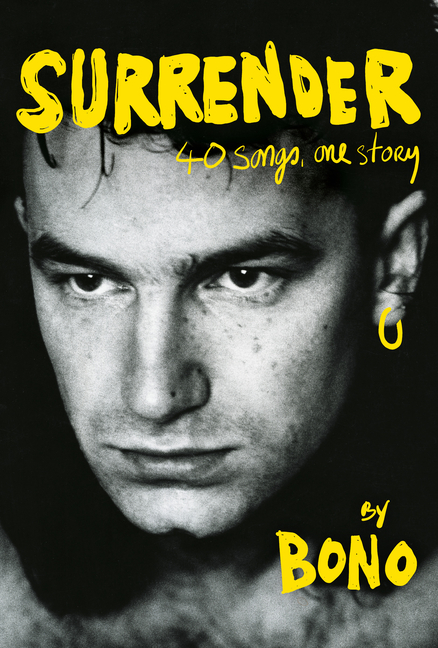
Bono
PositiveNew Statesman (UK)What is the purpose of a rock-star autobiography? You spend years having powerfully unconscious reactions to their music, then when they write their book, you get to see how they see themselves ... Though the structure is chronological, the tone is not. There is such power in the narrating voice, such apparent self-knowledge in the all-seeing \'I\' that swivels back and forth over the years, that there is little sense of a character developing. Why? Because Bono has already made these journeys of self-discovery with his maker. And I’m not saying that facetiously.