RaveThe New StatesmanAs McDonagh’s vivid, engaging narrative implies, a traditional faith does not automatically give rise to a rigid and authoritarian culture. It can, but at its best 20th-century Catholicism gave birth to social and political experiments as daring as the Catholic Worker movement and the Spanish Mondragon cooperative, popular art as successful as Lord of the Rings and the Sagrada Família, and a subculture healthy enough that by 1960 annual conversions in England and Wales reached 14,483 ... Much of the converts’ stories is pretty familiar – especially to converts like me – and I wondered whether McDonagh’s book would feel like a mere rerun. In fact she is the ideal author for the subject, being simultaneously a serious Catholic, a history PhD, and a seasoned Fleet Street journalist who takes as her 11th commandment that the reader should never be allowed to get bored. The book is just pious enough to take its subjects’ inner lives seriously, but not so much so as to slip into a churchy hush ... Occasionally there could be a firmer editorial hand: the word \'remarkable\' appears three times in the space of seven lines on page two, and the chapter on Siegfried Sassoon devolves into a series of letters, reproduced without comment, whose appeal is not obvious. But the book, in its cheerfully unsentimental way, does demonstrate not only why the floodgates opened for a few decades, but also why the stream has never quite dried up.
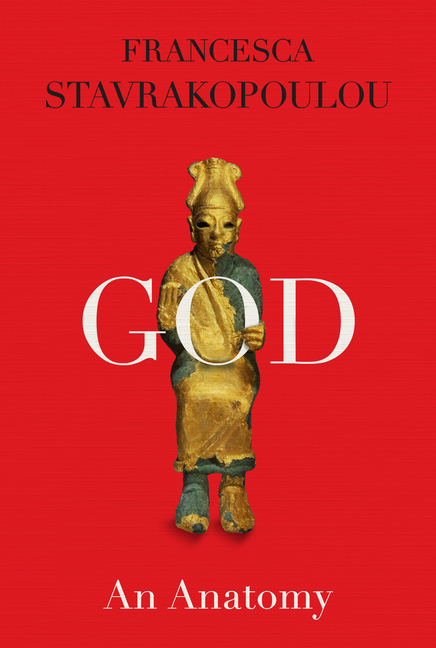
Francesca Stavrakopoulou
PanThe Times (UK)Stavrakopoulou has the good grace to quote these distinguished opponents, but she never explains why they are wrong. There is, instead, a lot of dark insinuation that this was the theologians’ \'strategy\' to \'veil\' the truth, or that they were under the “elitist” influence of Greek philosophers who wrote about the immateriality of God: throughout this book, taking Plato and Aristotle seriously is considered a rather shameful habit ... Stavrakopoulou has a lively, unfussy prose style well suited to this kind of study ... More often, however, Stavrakopoulou’s interpretations drain the colour from the Bible ... The blurb suggests that Stavrakopoulou will examine \'the origins of our civilisation\', but her approach tends to make the Bible’s most important passages meaningless or ridiculous ... Great texts always provoke varying interpretations: it is one mark of their greatness that each generation finds something new in them. But sometimes a novel interpretation is also hopelessly wrongheaded.
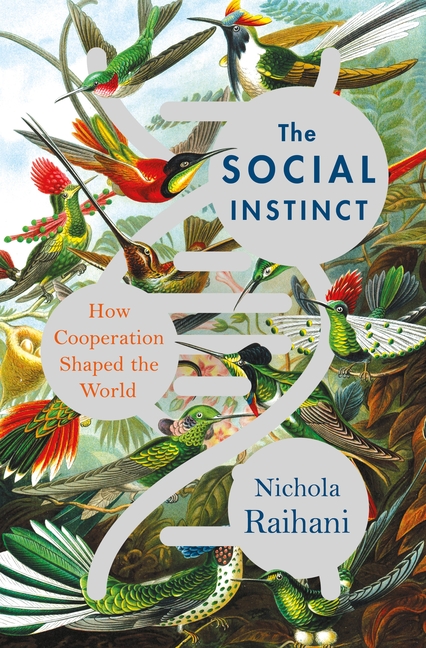
Nichola Raihani
MixedThe Times (UK)The book starts promisingly enough, with Raihani gathering weird and wonderful examples of the “social instinct” among humans and our fellow creatures ... The only problem is Raihani’s fairly rigid application of Darwinian logic. She doesn’t get bogged down in the long-running debate about how much of human nature can be explained by evolution. Still, the book tends towards the approach that the philosopher-neuroscientist Raymond Tallis witheringly calls \'Darwinitis\'; interpreting all human behaviour in terms of how it helps us to survive or reproduce. The \'ultimate explanation\' of our habits, Raihani believes, is a Darwinian one.