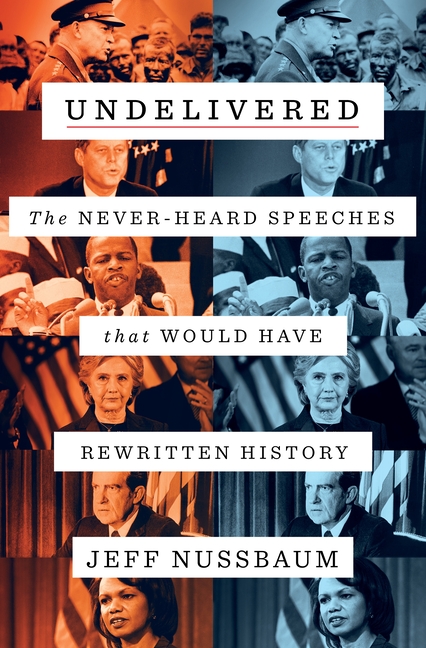
PositiveNew RepublicNussbaum, speechwriter for powerful politicians, including then–Vice President Joe Biden, tells the stories of speeches that never made history because events prevented their delivery—often happily, at times unhappily...The unifying premise of Undelivered is to highlight the central role of speeches in the making of history and the glimpses they offer of alternative worlds we might inhabit...The hitch, however, is that some undelivered speeches turn out to have been simply undeliverable or never intended for delivery, making it difficult to imagine them as keys to alternative worlds...Undelivered longs for enlightened leadership...But the book’s own account of how speechwriters have come to craft lines for politicians pretending intimacy with their audiences illuminates some of the sources of diminishing faith in such figures.
Nicholas Mulder
RaveLos Angeles Review of BooksThe Economic Weapon punctures the myth that sanctions have been an alternative or antidote to war, while tracing their shifting purpose from preserving inter-state relations to toppling internal political regimes ... Mulder’s indispensable book traces the consolidation of international sanctions and their myriad effects, illuminating how the United Nations came to distinguish between coercive measures that were \'war proper\' and those that \'preserved peace in notional terms.\'
William Dalrymple
MixedThe Los Angeles Review of BooksThe Anarchy, William Dalrymple’s gripping book on the East India Company’s \'relentless rise\' in the Indian subcontinent from 1756 to 1803, settles many things ... Still, Dalrymple’s literary commitments and tight focus on the Company constrain it from grappling fully with the realities of colonialism ... Drawing richly from sources in multiple languages, The Anarchy is gorgeously adorned with luminous images representing a range of perspectives. (I only wish the poetry laced throughout had also been presented in the original languages.) Delightful passages abound ... Of course, history is a human story, not a crime scene, but the way we narrate it is informed by the ethical and political mores we favor in our own time, and insofar as \'our world is far from post-imperial, and quite probably will never be,\' we are obligated to question the old canard that India was asking for it. Dalrymple styles Delhi as \'an overripe mango […] in decay, ready to fall and disintegrate,\' but colonial cliché is surely more rotten ... Dalrymple has taken us to the limit of what page-turning history can be and do. But it works by activating cultural-neural wiring older than Kipling.