Our mixum-gatherum of magnificent reviews this week includes Emma Alpern on Emma Cline’s Switzy, T. M. Brown on Danny McBride’s Thrilling Tales of Modern Men, Sara Collins on Sebastian Barry’s The Newer World, Joy Williams on Lance Richardson’s True Nature, and Tembe Denton-Hurst on Marlon James’ The Disappearers.
*
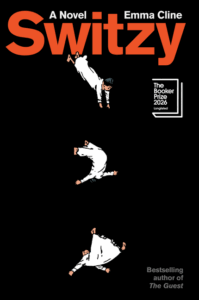
“Switzy is Cline’s big swing, already longlisted for the Booker Prize. At times, it’s sentimental, unfolding with a sense of its own importance. It’s also odder and more buoyant than you might think with a narrative voice pieced together from David’s Alzheimer’s-inflected thoughts. When he’s tired, they mumble and loop. Song lyrics, phrases, and stray words bob in and out like visitors stopping by for a last laugh or scare.
As in this year’s other notable book about dementia, Ben Lerner’s Transcription, the fritzing out of David’s memory seems primarily like a language disorder. There are puns, misreadings, nicknames given to people whose names he can’t remember or prefers not to. (The liaison, Anna Gould, becomes Ghoul; a black-car driver is called Meatball.) There are snippets from Moby-Dick and The Sound of Music, a nauseous memory of the Stanley Steemer man who used to soak David’s carpets with a toxic cleaning agent that squelched around his bare feet (‘Suck, suck, suck’). The result can read like a puzzle, but it’s rarely clever or cutesy. Instead, Cline…is implying that this is just what a mind does when it’s thrown into isolation: a soothing sort of wordplay with the materials it has at hand, all of a person’s lexical rubble shifting around one final time.
…
“In Switzy, Cline’s tendency to let her plots roam around a flat surface rather than run up hills works in her favor. ‘I find myself really resisting a neat narrative arc,’ she said in a Paris Review interview in 2020. ‘I think the best you can hope for is resonance, or a slow circling-around of a moment or an emotion. It’s so much more ambient and diffuse, and a lot less concrete.’ Her books have lurid central set pieces—The Girls and The Guest, respectively, are about a fictionalized version of the Manson Family and a scammer vamping her way through the Hamptons—but Cline often lets the action go slack, making her a strangely withholding, even dour, literary-thriller writer. In Switzy, about a person realizing, with shame, how little human contact he’s actually had, that approach finally coheres. She’s a stronger writer on the sentence level here, and most important, she has found a character who rewards her impulse to write in loops.
Every now and then, the novel expands to a bigger view of things. David is not alone in losing his mind in the internet era: ‘Now there were a million mental jaunts available to you in every moment, consciousness in a constant state of fracture.’ Maybe, he thinks, that’s why no one noticed when he started to drift away. But unlike Transcription or George Saunders’s Vigil, the year’s other novel about a rich old man on his way to the underworld, this book doesn’t try to diagnose our collective ills. What’s left is something smaller, more tense and tender: an old song, Cody’s watchful presence, one last wag of the eyebrows.”
–Emma Alpern on Emma Cline’s Switzy (Vulture)
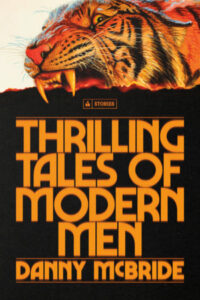
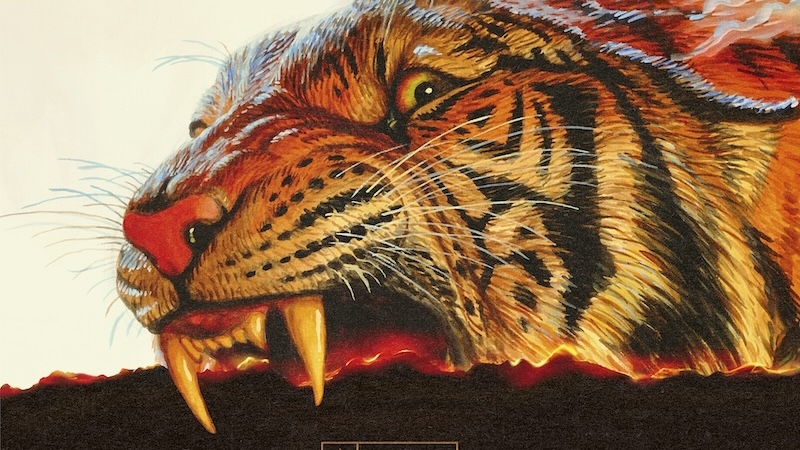
“McBride’s stories aren’t misandrist per se, but they do poke fun at male woes, in a way that is neither flippant nor overly serious. ‘The Institute of Men,’ a fable-like story and a standout in the book, is told from the perspective of Mitchie, a balding forty-two-year-old who undergoes an experimental treatment to get his hair and swagger back. The process is marked by varying affronts, but Mitchie presses on, basking in the compliments of co-workers and the attention of a love interest, until it all goes terribly wrong. Like much of the collection, ‘Institute’ is an ‘if only’ story, in which the protagonist nurses a fatal flaw that prevents him from being fulfilled—if only I were braver (‘The Book Burner’), if only I were younger (‘Dad’s Way’), if only I wasn’t losing my hair (‘Institute’). One is briefly reminded of Ernest Hemingway’s 1927 short story collection, Men Without Women, which springs from a single prompt: If only there were no women.
…
“A strain of envy, in particular, runs through Thrilling Tales. In an interview in June, McBride told the Times’ David Marchese that jealousy is ‘one of those flaws that says so much about someone because it shows what’s important to them and how they look at themselves and feel like they’re not complete.’ The darker corners of the internet are all too eager to offer men a compelling list of reasons for why their lives are unfulfilling, as well as an echo chamber full of the similarly aggrieved. McBride, like all good satirists, cranks up the volume of those resentments and insecurities, in the process revealing a new way to see the world.
…
“McBride was born in south Georgia before eventually moving to Virginia as a child, and many of his stories are set between those two points of the American coastal South. He writes in a sort of thespian-bro argot, spiking locker-room jokes with rococo word choices like a frat-house Faulkner. When Greg explains his plans to become a professional magician to his friends while they’re cruising the marsh in a fishing boat, he gets irritated by a suggestion that he’d be an article of cheap entertainment for children. ‘No, I won’t be doing kids’ fucking birthday parties. Jesus. I’m doing real magician stuff. Things of spectacle and scope,’ he says.
…
“McBride’s work as an author and actor injects something refreshing into the discussion. Instead of reinforcing the implicit misogyny of masculine self-pity—men’s plight is someone’s fault, and women are a natural antagonist—he encourages guys to loosen up a bit and even laugh at themselves. He doesn’t think that position is at odds with a modern notion of masculinity; nor is he unsympathetic to listless guys who may be struggling to make sense of their place in the world . . . Books like McBride’s Thrilling Tales, then, might be a solution to the seemingly eternal masculine struggle—or at least a more likely one than endlessly handwringing over men’s troubles in this country, whether writing in magazines or speaking on panels.”
–T. M. Brown on Danny McBride’s Thrilling Tales of Modern Men (The New Yorker)
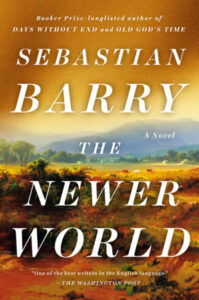
“‘But is not the story as good as the truth?’ asks Tennyson Bouguereau, the narrator of Sebastian Barry’s The Newer World. Tennyson, a formerly enslaved man in post-civil war America, recounts his life story in ways that call to mind the age-old debate about whether it’s better to get our history from novelists or historians. While historians might argue that there is no contest, the question hints knowingly at the novelist’s counter-argument. It sent me searching for a line from Barry’s 2008 Costa-award winning novel, The Secret Scripture, in which the narrator describes history as ‘a fabulous arrangement of surmises and guesses held up as a banner against the assault of withering truth.’
In her Reith Lectures, Hilary Mantel suggested that history is ‘what’s left in the sieve when the centuries have run through it,’ but I tend to think of it as more of a butterfly net. Historians chase after and capture the things they deem significant. They leave things out, often deliberately. Barry’s entire body of work is a prime example of fiction’s ability to fill history’s gaps, merging personal tragedies with national ones in ways that (dare I say) demonstrate the supremacy of the form – especially for those of us descended from people for whom history never cared one whit.
…
“This passing of the storytelling baton—an Irish refugee ceding the floor to a Native American woman, who then does the same in favour of a formerly enslaved man—feels as urgently contemporary as the best historical fiction always does, relevant to ‘the writer’s now,’ to borrow John Fowles’s phrase. So too does the description of a postbellum Tennessee landscape in which the Confederates may have been defeated but their ideologies are still virulently alive: ‘All their intent was to shove us back into the hog pen and put the hasp on tight as they could, against any further straying.’
…
“The thing I like best about a Barry novel is how he gives a voice to the ‘nothing people’ of history. It’s like pulling up a rocking chair on a shaded porch and listening as the narrator, usually in retrospective mode, attempts to reckon with what they did and what was done to them. It’s an astonishing effect, especially when you consider the near-miracles Barry performs with language. In his hands it attains registers that can only be described as soaring; a vertiginous high wire of prose.
…
“Putting this kind of arresting language into the mouths of ‘nothing people’ makes it impossible to overlook them, as if only in fiction can they be given their due. And there is also a compelling point in using language from the poetic realm to reveal rather than cloak atrocities, its rhythms building to an unrelenting lyricism, a juggernaut that gains power precisely because it is not just set alongside brutality but entwined with it . . . I can think of no other writer who could, as Barry does, describe blood and chaos in language that reaches for such a high register, as if at the same time invoking paradise, in an attempt to answer that question. I can also think of few whose natural writerly empathy, evidenced by such an impressive body of work, pre-empts the otherwise inevitable discussion about cultural appropriation. Any writer has the right to imagine any point of view, but few truly earn it.”
–Sara Collins on Sebastian Barry’s The Newer World (The Guardian)

If you buy books linked on our site, Lit Hub may earn a commission from Bookshop.org, whose fees support independent bookstores.