Our tasting menu of terrific reviews this week includes Brandon Taylor on Michael Cunningham’s Unsayable, Grace Byron on Missouri Williams’ The Vivisectors, Alex Shephard on Franklin Foer’s How Soccer Explains the World, Robert Rubsam on Amitav Ghosh’s Ghost-Eye, and Charlotte Shane on Sean Hotchkiss’s Hating Women.
*
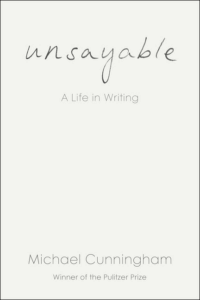
“To this genre of graduation literature, I would add Unsayable, Michael Cunningham’s new book, which presents itself as a memoir of the writing life. The book takes us from Cunningham’s earliest memory to the present-ish day, though in classic Cunningham fashion, it is not so much a straight line as a set of revolving doors through which the reader passes from straightforward biography to thinly philosophical meditations on writing and back again. The insights on writing and creativity that Unsayable offers are of the trite variety that you might find on a coffee mug in a bookstore. It will do absolute numbers at writing conferences and in gift bags to undergraduates on their way to M.F.A. programs.
…
“Writing about his years in California and New York during the ’70s, ’80s and ’90s, Cunningham offers a few names and a few places, but for the most part, everything feels deeply recessed and occluded, as though the quality of the memory itself had been somehow compromised. This can be frustrating for the reader, particularly the queer reader, who yearns to walk the streets alongside Cunningham.
One can be forgiven for going into Unsayable expecting to witness the formation of one of the most underrated American stylists of his generation. What we get instead is the dense scrim of Cunningham’s nostalgia and sentimentality, through which it is hard to discern much of anything at high resolution.
…
“These sections summon, if only for a few pages at a time, a whole world of queer men that is rapidly vanishing with the generation who lived it. This is part of my frustration with Unsayable: Though the author never asked to be among this generation nearly wiped out by AIDS, he is. It feels somehow like a dereliction of responsibility to call this book a memoir and then refuse to do much remembering in it. If the book is aphoristic, it is elegantly so; and it continues to demonstrate Cunningham’s longstanding interest in formal play, alternating autobiography with meditations on craft and examples of the craft itself, injecting anecdotes out of chronological order. Michael Cunningham is a beautiful writer. We know that already. I came to this book hoping to hear him tell all the stories I am still waiting to hear.”
–Brandon Taylor on Michael Cunningham’s Unsayable: A Life in Writing (The New York Times Book Review)

“Williams’s refusal to precisely identify her characters’ subject positions seems like an attempt to strip specificity from contemporary debates—to let readers see past the scroll of discourse to the strangeness of language itself. She avoids tired debates about ‘wokeness’ while still riffing on themes of grievance, injustice, aging, and power—abstracting these issues and refusing to address their concrete material realities. When this tactic touches on race and disability, Williams’s enigmatic approach starts to wear thin. Thankfully, it’s not the only theme The Vivisectors takes up.
What begins as a novel ostensibly about ‘cancel culture’ quickly shifts into a rueful elegy for a dying world. The war on language is more metaphysical than just the policing of proper social justice terminology, Williams argues. In her universe, those who know when to speak—and when to stay quiet—are rewarded with safety from the horrors.
…
“Williams’s language is muddy, overflowing, and fertile at once. People are objects, terrified of one another as they wake up to nightmarish scenes. ‘This is what love is like in my dreams—anticipation of violence,’ Williams writes. The light is always ‘slanted,’ casting the novel’s gnomic creations in disquieting atmospherics. Many of the characters are deformed in some way, though Williams does not adopt the language of disability to describe their particular experiences. Some are described as ‘lumps.’
Agathe’s boss is blunt about her views on disability. She argues that autistic people are on ‘a superior spiritual level’ and she doesn’t ‘say that about every disabled person because for the most part disability is a punishment for the things that a person did in their previous life.’ In her exploration of autism, as with race, Williams lets us see the folly of her characters—their refusal to acknowledge difference without resorting to offensive platitudes. She’s also trolling us. Some works of horror or fantasy riff on disability or gender to flip the fulcrum of power—Williams did so in The Doloriad, a novel in which deformed humans have a fully developed interiority—but that is not the case here.
Throughout her fiction, Williams has been most interested in the malleability of language, reveling in its instability. The Vivisectors is about the ability of words to both create and destroy, and Williams is adept at writing about academia and cancel culture without moralizing. In this way, her new novel runs parallel to films like After the Hunt that attempt to understand the depths of our political divide. Unlike Luca Guadagnino’s 2025 film, however, The Vivisectors refuses to sentimentalize the conflict. Williams’s characters are eventually forced to contend with the carnage of their actions, the way their values—or lack thereof—shape them. In this eerie exploration of jargon and estrangement, Williams has crafted a beguiling dissection of morality.”
–Grace Byron on Missouri Williams’ The Vivisectors (Bookforum)

“How Soccer Explains the World is really three books in one. It’s a travelogue, in which Foer, a former editor of this magazine, travels the globe to glean lessons from fans and social scientists. It’s a plea to Americans like himself—educated, erudite, indoor kids—to open themselves up to the magic of the world’s game. And it is an attempt to stitch together his reporting into a larger theory about how soccer points to the future of a globalized, interconnected world; he notes the persistence of tribalism, nationalism, and antisemitism and the fact that globalization not only creates its own winners or losers but provides its own incentive structure for corruption. There are parts of this book that very much anticipate a world—and a sport—dominated by oligarchy and greed.
Yet travel books—and books about sports, for that matter—are inevitably time capsules and Foer’s feels like one somewhat out of step with his own time, let alone ours. Published a year after the start of the Iraq War, Foer’s rosy look at globalization was already passé as the U.S. took on a more aggressive, hostile, and xenophobic posture to the rest of the world. It arrived at a pivotal moment in the rise of U.S. soccer but also one for the economic trends he describes. It was still possible to be hopeful, albeit faintly so, about globalization in 2004. In 2026, it looks considerably different.
…
“As the book progresses, it increasingly becomes an argument for globalization as soccer or soccer as globalization: that by heralding a more interconnected world, the sport can bring freedom, prosperity, and even peace where it is currently absent. Foer, to his credit, is a reporter—and a very good one—more than a polemicist. And more than two decades on, the most interesting thing about How Soccer Explains the World is the tension between being a travelogue and an airport book. In the former category, it is almost uniformly excellent: Foer is curious and incisive, with a great eye for character and detail. As an outsider—an American and a Jew—he is able to move seamlessly between fans of Glasgow’s Catholic team—Celtic—and its Protestant outfit—Rangers—in a chapter about the persistence of sectarian rivalry in a society that had otherwise ‘eradicated discrimination in the public sphere.’
…
“There is, especially in retrospect, also a sense that a devotion to a flawed thesis means Foer is missing the bigger story. The era he is writing about was already over in 2004. In the wake of the September 11 attacks, the world was calcifying; the good feelings that—at least in the United States—followed the end of the Cold War were long gone. Roman Abramovich, the Russian oligarch, bought Chelsea in 2003, heralding a new era of financialization and oligarchic control. There was, even then, a strong sense that globalization was being used by oligarchs and elites to entrench their control, that liberalism, free trade, and cultural exchange were not antidotes to tribalism or sectarianism, and that the rosy post-Cold War projections of rising tides lifting all boats were already wrong. Soccer certainly explains that world too.”
–Alex Shephard on Franklin Foer’s How Soccer Explains the World (The New Republic)
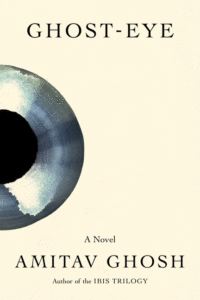
“In much of literary fiction, characters and settings are developed slowly, through the gradual accrual of discrete moments that rarely stray from the mundane and the reasonable. Yet this supposedly ‘realist’ form, Ghosh argues, is in fact engaged in a ‘concealment of the real.’ For many people on Earth, life is full of abrupt and irrevocable events. Homes flood; tornadoes rip up crops; fires swallow families. To be unfamiliar with these outcomes is to be the outlier, not the norm. So why, Ghosh wonders, are such rapid turnabouts so rarely present in the genre? Ghost-Eye, his 11th and latest novel, attempts to push back on this aversion to the improbable, and thus to the catastrophic—though it fails to effectively solve the problem.
…
“To say that Ghost-Eye is a novel of disaster would be underselling it. Storms smash into cities, disease shuts down whole societies, and millions of humans migrate across the globe. The scale of these events transcends the limits of any individual experience—making it difficult for the typical realistic novel to contain them, as Ghosh has argued.
At the same time, natural disasters, fed and intensified by man-made climate change, are entering the realm of the familiar. In the decade since Ghosh published The Great Derangement, a few novelists have attempted to make sense of these disruptions in fiction. In Jenny Offill’s Weather, climate change intrudes on its narrator’s mundane day-to-day thoughts, a nagging anxiety that never quite boils over. Lydia Kiesling’s Mobility attempts something at once more traditional and more ambitious, exploring how a young woman tries to disentangle herself from the oil industry’s poisonous tendrils. Both do a fine job of capturing how it feels to live through an age of human-engineered hazards. Yet these novels, alongside other recent works by Richard Flanagan and Alexandra Kleeman, struggle to convey what Ghosh describes in The Great Derangement as the ‘scalar’ dimensions of the Anthropocene, an age defined by ‘forces of unthinkable magnitude’ that both dwarf and discount any one perspective.
As it goes on, Ghost-Eye becomes a quest to recover ancient, repressed forces—the supernatural powers rejected by modernity, yet still alive in the spiritualism infusing the lives of most people on the planet. In the course of her investigation, Shoma begins to suspect that Varsha is clairvoyant. The pair’s mysterious interactions in the early chapters give way to a series of parables of doubt and belief, in which a rational character is confronted by an irrational event—and immediately convinced of its absolute truth. These conversions are not grounded in the characters that Ghosh has sketched, but rather in the plot he needs them to advance. Character gives way to contrivance, and Ghost-Eye collapses under the strain.
…
“The trouble, once again, comes down to questions of scale. As Ghosh himself has noted, the ‘realistic’ novel is loath to make space for unlikely events—yet his solution to this problem is at odds with his own skill set. In the end, Ghosh is a very traditional novelist, adept at sketching scenes and enlivening characters with well-placed detail. But as his novel goes on, nighttime scenes and vivid memories are replaced by exchanges of purely expository dialogue, which seeks to explain to the reader, point by point, the book’s ghostly developments. This approach substitutes information for sensation, and reduces both human and supra-human experiences to the level of data.”
–Robert Rubsam on Amitav Ghosh’s Ghost-Eye (The Atlantic)
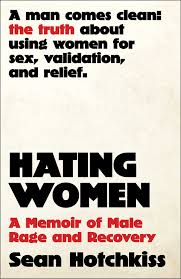
“Sean Hotchkiss’s Hating Women is a thoroughly misnamed book. Though the title suggests the dark confessions of a reformed Andrew Tate-like figure, the work contains no acts of women-hating, nor does it truly grapple with ‘male rage,’ a feat that would require confrontation with the terrifying reality of male violence. Instead, Hating Women is a gentle self-help guide disguised as memoir. Its true intention is to mitigate the damage wrought by paternal absence and the larger phenomenon of men abandoning one another. This worthy project is sabotaged by a marketing-minded approach that renders it incoherent. ‘Thank you,’ Hotchkiss writes to his editor in the acknowledgments, ‘for presenting me with a title that I initially fought, but then caused me to dig deeper.’ Her counsel, however well-meant, was unwise.
…
“But it’s hard to distinguish what Hotchkiss deems his ‘dependency’ on women from his (mis)use of other drugs. Both habits are compulsive, self-soothing, and ultimately self-harming, yet only his history with women drives the story while his drug use is, disconcertingly, downplayed. On the cusp of thirty, when Hotchkiss lists ‘all the terrible things’ he’s done in his young life, romantic transgressions are not among them. There’s no reproductive or sexual coercion, no assault or verbal abuse, no infidelity, not even a roguish instance of lying to a woman about his regard for her, stringing along one who longs to be married, or sleeping with someone before turning to her best friend. The resulting catalogue of wrongs is instead a sad standard for millions of men and women plagued by addiction: money stolen, cars crashed, special occasions ruined by getting shitfaced on whatever drugs are at hand.
…
“Hotchkiss also says that his former self was sexually callous, attracting ‘the most desperate sort of women’ and ‘running away when things got serious,’ a depiction of noncommitment complicated by a string of lived-with girlfriends and the opposing claim that he often rushed into and clung onto relationships. People contain multitudes, but such contradictions are the whole of the book. Hotchkiss insists he hated women with no behavior to support the claim; he insists he had dramatic breakthroughs but then quickly returns to old patterns. Either significant information is being withheld, or the interpretation does not align with the facts. Possibly, it’s both. The result is a death knell for the only indispensable element in self-help, which is the author’s authority. Readers looking to better themselves can excuse rhetorical carelessness and imprecision, even outright misinformation, as long as they find themselves convinced. But a narrative so muddled can hardly be persuasive.
…
“It’s strange to find myself, as a woman, complaining that a narrator seems to harbor no bitterness toward women. It would be world-changing for all men, however nonviolent, however ‘good,’ to squarely face their misogynist instincts and tear out those gnarly roots. But to describe misogyny as almost a mood, an occasionally flaring personal affliction that manifests in erratic romantic conduct, instead of recognizing it as a murderous, structurally supported pathology, is trivializing in the extreme. Yes, one might ‘hate’ women for symbolizing weakness, and yes, a man might hate women because he hates himself. But there are men who openly yearn to humiliate, control, and harm women as a class, and there are men who do it. By his own telling, Hotchkiss is not and apparently never has been among them. And nothing Hotchkiss accuses himself of enacting in his past is as disrespectful to women as the wholly gratuitous use of woman-hating as a device throughout the book.”
–Charlotte Shane on Sean Hotchkiss’s Hating Women: A Memoir of Male Rage and Recovery (Bookforum)

If you buy books linked on our site, Lit Hub may earn a commission from Bookshop.org, whose fees support independent bookstores.