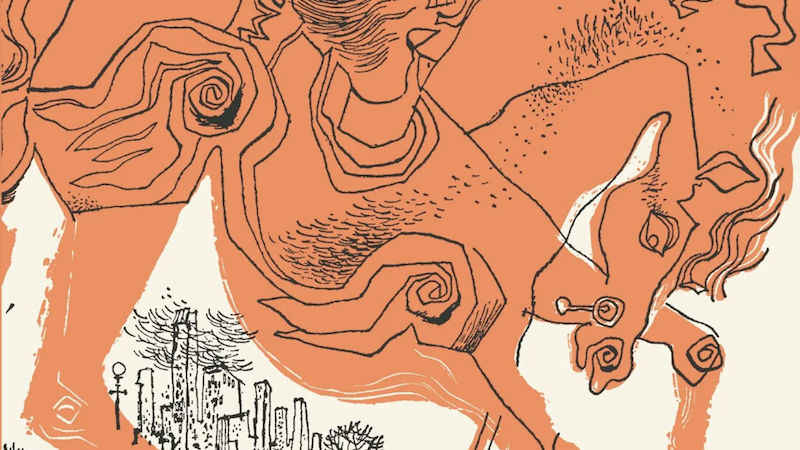
Our bevy of brilliant reviews this week includes Lily Meyer on J. D. Salinger’s The Catcher in the Rye, Adam Federman on Matthew Wolfe’s Fires in the Night, Lauren Christensen on Julie Buntin’s Famous Men, Lauren LeBlanc on Claire Vaye Watkins’ Yellow Pine, and Peter C. Baker on Nathaniel Rich’s Cloudthief.
*
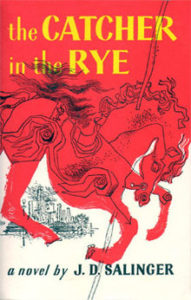
“Over the decades of Catcher’s fame, the novel has gained a reputation as the tale of a teenager who rejects nearly everything. It’s a reasonable interpretation, given how often Salinger puts his hero’s values in negative terms. Holden is against selling out, against Hollywood, against acting, against siding with hotshots, against favoring anyone for their style or wealth, against wealth generally, against elite institutions—’I wouldn’t go to one of those Ivy League colleges, if I was dying,’ he announces—and against what he calls ‘horsing around with girls that, deep down, gave me a pain in the ass.’
But rereading Catcher recently, I was struck not by what Holden is against but by what he’s for. Along with all of his rejections, Holden has a very clear set of ideas about what sorts of behaviors and activities and companions are correct. He doesn’t always live up to his own standards, but he never changes them; he certainly doesn’t give himself breaks. His monologue—the whole book is a monologue—is, in fact, a stream of statements about what’s worthwhile, more than what’s worthless.
Holden’s moral rigor is refreshing in a cultural moment marked by an unsettling mix of cynicism and heedlessness. Politicians and podcasters model an ethos of resentment, dominance, and 15-minute fame for today’s young men. Sometimes this recklessness manifests as a disinterest in consequences, even dire ones—say, the president of the United States declaring, in the context of the war with Iran, ‘I don’t think about Americans’ financial situation.’ On a shallower level, there’s Clavicular, a streamer who has said that he may have sacrificed his fertility by taking testosterone in a quest to make himself as handsome as possible. Potentially killing your sperm in order to become more attractive to women is a rebellion against conventional ideas of what male handsomeness is for; Trump’s style of governing is a rebellion against old norms regarding the presidency. Both aim to attract attention in the moment, with little regard for what may come next. Holden yearns for the reverse.
…
“Catcher at 75 offers something of a guide away from the manosphere and its bluster: a case against nihilism and a vision of a gentler sort of manhood, even if achieving it means living on the edge of a cultural cliff.”
–Lily Meyer on J. D. Salinger’s The Catcher in the Rye (The Atlantic)
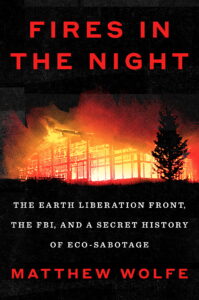
“Wolfe’s riveting account of the ELF’s rise and fall—based on over a hundred interviews, footage from a documentary project that was never finished, Freedom of Information Act records, and the forensic recreation of the events in question—is not a morality tale. He’s not really interested in passing judgment, and he draws sympathetic but not uncritical portraits of the activists and the law enforcement agents who pursued them. At times, the ELF comes off as a band of reckless crusaders destroying historical archives maintained by the Forest Service and severely damaging a research lab at the University of Washington that focused largely on environmental restoration. But with hindsight, and an understanding of our current political and ecological predicament, it is difficult not to conclude, as Wolfe does, that the ELF members were not only ‘uncomfortably prescient about our collective inability’ to deal with one of the world’s most pressing problems but also, in some ways, voices crying in the wilderness (or as Wolfe puts it, ‘little people doing things in the dark’).
Wolfe entertains the argument that all forms of property destruction are unacceptable because they undermine the rule of law central to a functioning democracy (or as David Marchese put it in his New York Times interview with [Andreas] Malm, How do you rationalize advocacy for violence within what are supposed to be the ideals of our system?). But then Wolfe turns the question around and asks, ‘What happens to faith in the law when the law permits cataclysm, when a system begets its own, slow destruction?’
…
“Looking back at the history of the ELF today, it can be easy to forget that only a decade ago, the political landscape seemed far more expansive. Sometimes it’s worth remembering—even in the face of seemingly insurmountable ecological and political crises—that victories, even if only temporary, are still possible.”
–Adam Federman on Matthew Wolfe’s Fires in the Night: The Earth Liberation Front, the FBI, and a Secret History of Eco-Sabotage (The New Republic)

“Reading Buntin’s magnificent, absorbing portrait of the ensuing, yearslong relationship between this ‘great American writer’ and his naïve, debt-laden employee feels like holding one of those lenticular 3-D baseball cards in your hand. From one angle the narrative invites murky, shades-of-gray interpretations of victimhood and consent, shame and ambition; but tilt the book a few degrees and the image of this age-chasm relationship is as black-and-white as they come … The beauty in this novel is in how Buntin tells it … This is a wickedly precise rendering of a young, self-destructive heroine worshiping at the altar of a false idol—and narrated in hindsight, from her later, more perspicacious vantage.
…
“Nathaniel ‘hates context in fiction,’ and tells his students to cut everything but ‘the good stuff.’ Buntin herself proves not just how important but how good back story can be: laying the foundation of Will’s scant self-regard, her desperate striving for the approval of men, so that by the time we get to the affair its details are almost beside the point. Here is how a young woman’s humiliation, fear and silent rage can confuse her very sense of what she wants.
…
“You know what happens next; the beauty in this novel is in how Buntin tells it. Like her debut, Marlena, about an intense, substance-fueled friendship between teenagers in northern Michigan, this is a wickedly precise rendering of a young, self-destructive heroine worshiping at the altar of a false idol—and narrated in hindsight, from her later, more perspicacious vantage.”
–Lauren Christensen on Julie Buntin’s Famous Men (The New York Times Book Review)

“Much like Watkins’s previous work, Yellow Pine takes place in the ravaged American Southwest that exists beyond the polish of Palm Springs and the tourists of Joshua Tree. Here, Watkins explores isolated communities in the Mojave desert soon after the Covid lockdown faded into the rearview mirror of American imagination. Watkins deploys incredible grace and rich humor as she populates this stark landscape with eccentric characters struggling with recovery, a society out of step with humanity, environmental doom, and the boom and bust of tourism ventures.
…
“Their romance builds and then languishes as Miles panics, then retreats. Meanwhile, Rose recognizes her desire for a second child, a second chance at motherhood and family life. Here, Watkins treads familiar emotional territory, revisiting the environmental doom that suffused her second novel, I Love You But I’ve Chosen Darkness. But unlike some of the other characters in novels of midlife frustration, Rose continually looks beyond herself. It’s the community, stupid.
Time and again, it’s neighbors and fellow community members who delightfully interrupt Rose’s ruminations. The offbeat pastors, salty bartenders, dashing drifters, and edgy academics quote Dylan (‘To live outside the law, you must be honest’) and reference Alison Bechdel and Lucinda Williams. Snap out of it, these voices tell the reader. We live in a scarred earth and had better make the most of it while it’s still habitable. Watkins skillfully chronicles a world of chosen families and iconoclast women who can’t deny their sentimental hearts. There’s nothing cozy about her imagined homeland, but its gravitational pull reminds us why we can’t give up fighting for the planet. Under one name or another, Watkins reminds us that there’s no place like home.”
–Lauren LeBlanc on Claire Vaye Watkins’ Yellow Pine (The Boston Globe)
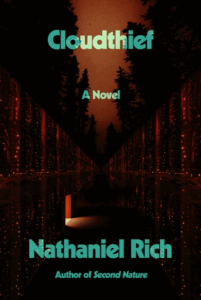
“What follows is a road trip that culminates in a heist caper. Rich inhabits both of these familiar forms with brisk effectiveness—he’s especially good with snappy dialogue—and sprinkles them with a hefty dusting of contemporary topicality. There are frequent passages about climate change and digital surveillance that, with slight adjustments, would not be out of place in Rich’s nonfiction. Most of this material will be familiar to his readers.
Underneath the topical coating, though, Cloudthief isn’t really about data centers, privacy or climate change. Its main subject seems to be Tim’s malaise—and, perhaps, a broader contemporary malaise for which Tim’s is meant to be a stand-in. He’s not just tired of climate journalism or the freelance life; he’s tired of his life, period.
…
Rich might have been afraid of putting too much explanatory weight on a writer’s existential boredom (or horniness). It’s as if he felt an obligation to make his characters’ actions more legible by providing motivations and back stories, but also resented having to write them and rushed accordingly. The tacked-on information about the characters’ childhoods and family woes is much less thought through than their digressions on global temperatures and server farms (much less interesting, too), and they make the novel feel less, not more, alive.
The book’s strongest component, by far, is the relationship between Tim and Virginia, which crackles with true-to-life ambiguity. They like each other. They’re using each other. Where’s the line? Neither character can say for sure, nor can the reader, and their interactions are all the more interesting for it. On the road, the duo develops a sexual relationship charged by mystery and play. We come to understand that what’s going on between them in their motel bedrooms is, at least for Tim, revelatory, attuning him to aspects of his personhood he’d previously overlooked. But, in a touch that dovetails delightfully with the novel’s topical subjects, the erotic specifics are almost entirely blurred out. By evoking the special human quality of their sex without showing the act, Rich nimbly reconstructs the wall of intimate privacy that cloud-enabled surveillance constantly threatens to erode.
But the novel rarely achieves this level of synergy between theme, plot and writerly technique. Tim, we come to understand, is throwing stuff at the wall of his life, desperate to see what might forge a break, launch him into a new chapter—but ultimately not quite getting there. Cloudthief, for all its author’s obvious skill, is a similar gesture.”
–Peter C. Baker on Nathaniel Rich’s Cloudthief (The New York Times Book Review)

If you buy books linked on our site, Lit Hub may earn a commission from Bookshop.org, whose fees support independent bookstores.